Bin Screens vs Wheelie Bin Covers: Which Suits Your Place?
A bin screen hides the bin where it lives. A cover changes how the bin looks wherever it goes, kerb included. Here's how they compare on cost, space and effort, and when each one makes sense.
Alistair Harris · 4 October 2026 · 7 min read

Bin screens and wheelie bin covers fix the same problem from opposite ends. A bin screen hides the bins where they're stored. A cover leaves the bin where it is and changes how it looks, at the house and out on the kerb. Which one suits you comes down to space, budget, whether you own the place, and how much the bin bothers you on bin night.
Here's how bin screens and covers compare, with prices checked at Australian retailers in October 2026.
What counts as a bin screen?
"Bin screen" covers a few different things, from a single panel to a full lidded box. Australian prices, as checked in October 2026:
- Slat screen panels. A freestanding or post-mounted panel that blocks the view from the street. Bunnings' ProtectorAl aluminium slat kits run from about $318 to just over $1,000 depending on size and colour. Composite lattice panels start lower, around $75 a panel, but you'll need several plus posts.
- Steel bin enclosures. A three-sided box with a lid that lifts with the bin's lid. Eden's 240L metal single is $299 at Bunnings and the double is $499. Absco's Colorbond version for two bins runs $366 to $574, and the three-bin model $419 to $689.
- Flat-pack timber and aluminium sheds. Doored boxes that hold two or three bins. A fir timber double shed was $289 on sale (RRP $499), and aluminium double enclosures from specialists like McPhails and Bindi were around $450 to $600 on sale.
- Custom-made enclosures. Made-to-measure aluminium slat enclosures from Australian fabricators start around $1,150 for two bins and go well past $1,700 with a back wall and gate, plus delivery.
- DIY timber builds. Bunnings has a step-by-step guide to building a three-bin Merbau screen. Material costs swing a lot with timber prices, so price it at your local store before you commit a weekend to it.
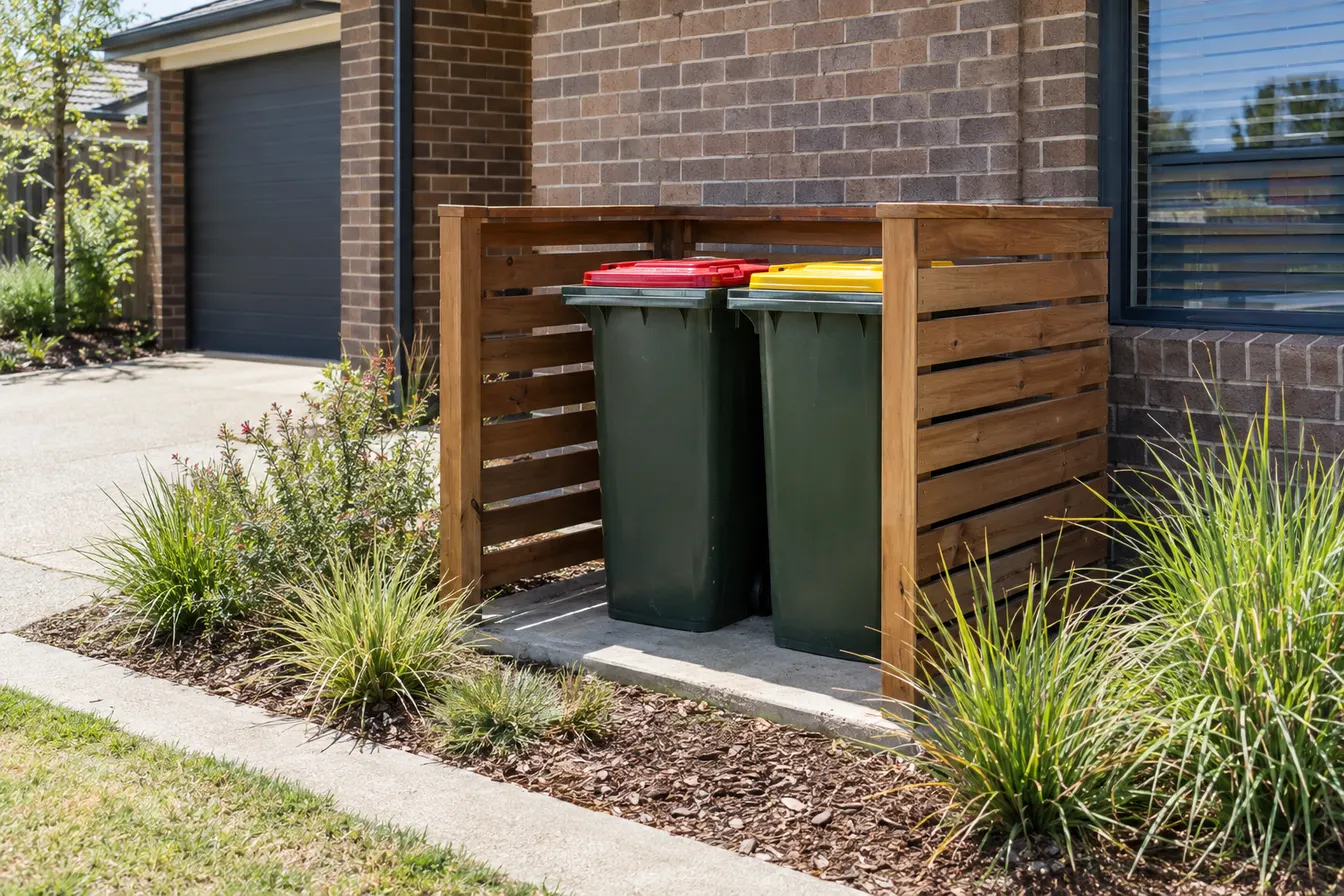
A screen works best when it sits beside or behind the house and the bins only come out on bin night. The trade-off is space: you need a strip of ground wide enough for the screen plus room to lift the bins out.
What a wheelie bin cover does differently
A wheelie bin cover is a printed stretch-fabric cover that fits over the body of the bin and leaves the lid, handle and wheels free. Instead of hiding the bin, it turns it into something you picked. It takes about two minutes to put on, needs no tools, and is machine washable.
The big difference is that the cover goes wherever the bin goes. A screen does nothing for the bin when it's out on the kerb every week, lined up in front of your house on collection day. A cover does.
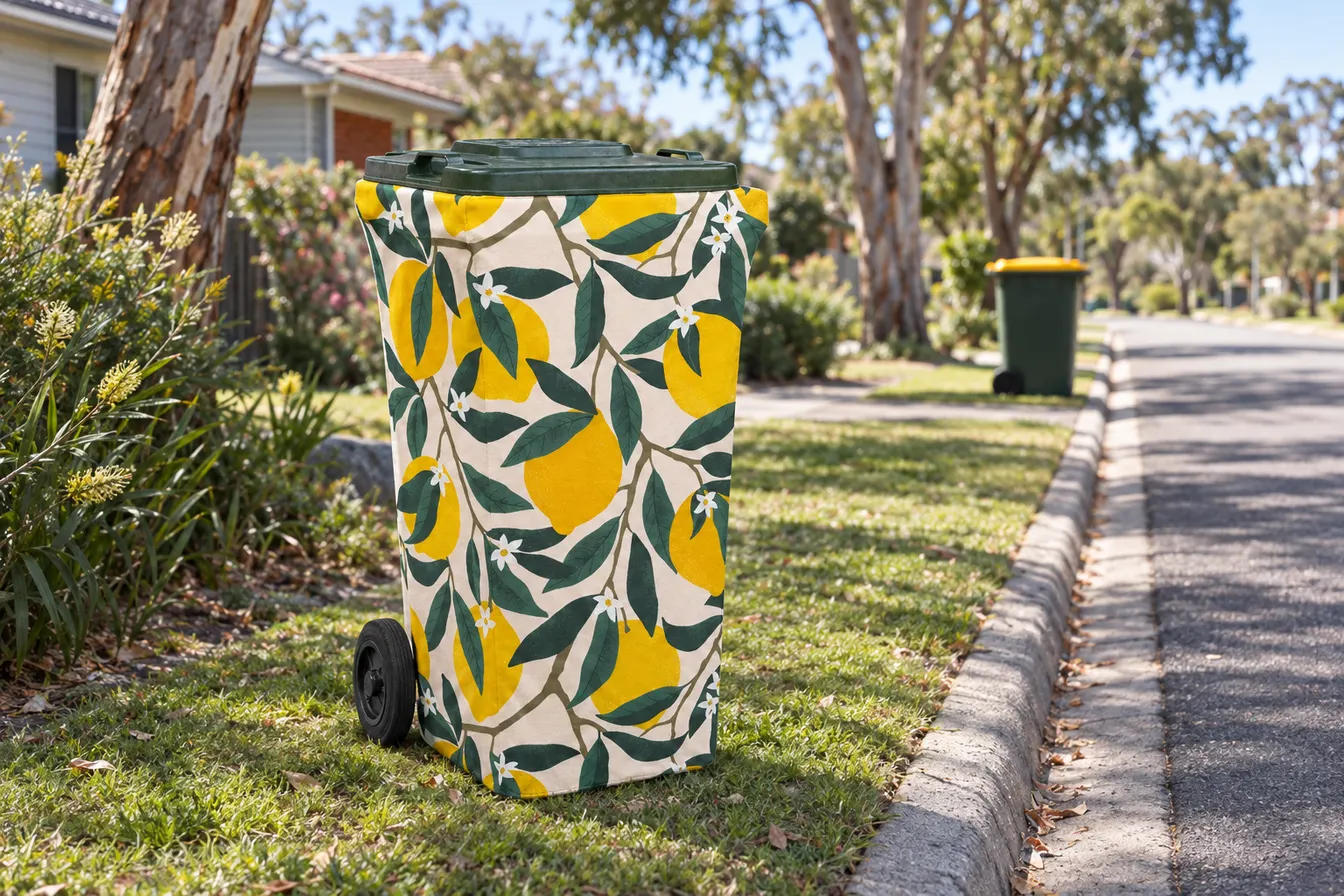
Our covers are made for standard 240L bins. One thing for Perth readers: many WA councils use a 140L bin for general waste, so there a cover fits the 240L recycling and FOGO bins rather than the red-lid bin.
Bin screens vs covers at a glance
Facts and prices checked October 2026. Prices from Australian retailers' websites, sale prices noted where they applied.
Price
- Bin screen or enclosure
- About $299 to $1,700+
- Wheelie bin cover
- $59.95
Space needed
- Bin screen or enclosure
- A wall or fence strip plus lifting room
- Wheelie bin cover
- None beyond the bin
Install
- Bin screen or enclosure
- Assembly or a build, sometimes concreting
- Wheelie bin cover
- About two minutes, no tools
Renters and strata
- Bin screen or enclosure
- Often needs permission
- Wheelie bin cover
- Comes straight off
Hides the bin at home
- Bin screen or enclosure
- Yes
- Wheelie bin cover
- No, it changes how the bin looks
Helps on bin night
- Bin screen or enclosure
- No, it stays at the house
- Wheelie bin cover
- Yes, it goes to the kerb
Upkeep
- Bin screen or enclosure
- Oil timber, check fixings
- Wheelie bin cover
- Wash when it needs it
Moving house
- Bin screen or enclosure
- Usually stays behind
- Wheelie bin cover
- Comes with you
When a bin screen is the better choice
- You own the place and plan to stay. A screen is part of the yard, and a good one adds a finished look.
- You have three bins and a side path. Hiding a whole row of bins where they're stored is exactly what screens are for.
- The bins live beside the front door or a living-room window. If the problem is the view from inside the house, a screen blocks it completely.
- Your council or estate requires it. Some councils require bin storage on new homes to be screened from the street. Newcastle's development control plan, for example, says bin storage should be screened from living areas, public roads and the neighbours.
When a cover is the better choice
- You rent. Nothing is fixed, nothing needs permission, and it comes with you when you move.
- You have no side access. In a townhouse or a new estate home, the bin often lives by the garage with no room for a screen around it.
- The bin bugs you most on bin night. A screen stays home. A cover is on the bin that's sitting on the kerb in front of the whole street.
- You want it sorted today. No measuring, no flat-pack, no weekend lost to a build.
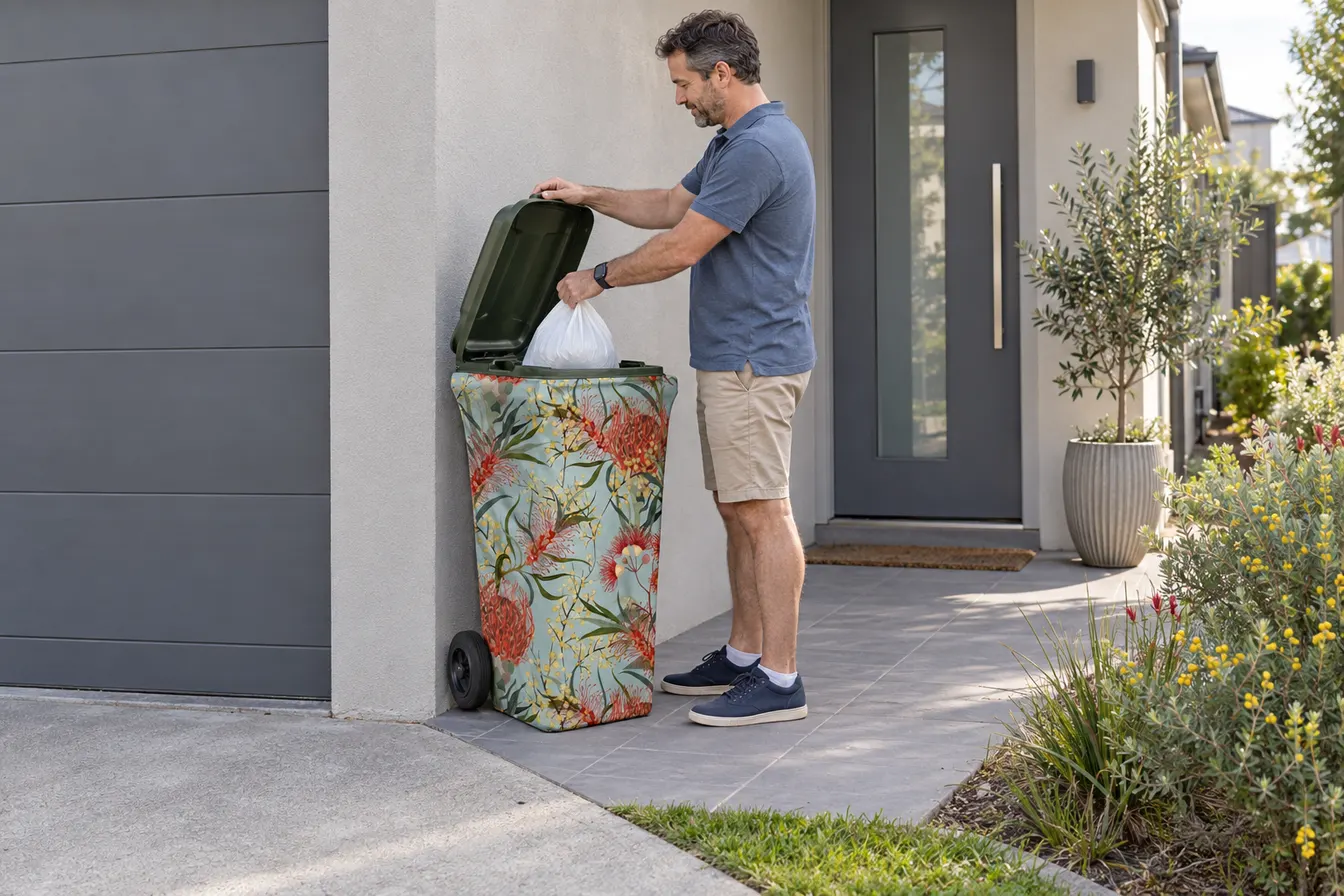
If you're on a small block, our guide to wheelie bin storage ideas for small spaces goes further into what fits where.
No room for a screen? Change the bin instead.
Wheelie Wraps covers fit a standard 240L council bin in about two minutes, need no tools and come off any time. $59.95, in patterns from quiet to loud.
Shop wheelie bin coversWhy not both?
Most homes have two or three bins but only one that's really on show. A common setup is a screen or enclosure for the bins that sit down the side, and a cover on the one parked by the garage or out the front, the one that also does the most trips to the kerb.
Measuring up for a screen
If you go the screen route, measure before you buy. A SULO 240L bin is 1060mm tall, 585mm wide and 730mm deep, and a SULO 140L is about 915mm tall, 535mm wide and 615mm deep. Australian screen maker Slatwerx recommends adding at least 120mm to the width and 60mm to the height and depth, which works out to about 750mm wide for one bin, 1350mm for two and 1950mm for three, at about 850mm deep. Leave clear space above for the lid to swing open, and a straight path out so the bins can roll to the kerb.
The short answer
A bin screen hides your bins where they're stored, and costs space, money and an afternoon or more to set up. A wheelie bin cover doesn't hide the bin. It makes the bin look good, needs no room at all, and goes out to the kerb with it every week. If you own the place and have room, a screen is a solid upgrade. If you rent, live in a townhouse, or mostly notice the bin on bin night, start with a cover. For every other way to deal with the bin, see our guide on how to hide ugly wheelie bins.
Sources
- Bunnings, Eden 240L metal single wheelie bin cover
- Bunnings, Absco 1.52m Colorbond wheelie bin cover
- Bunnings, ProtectorAl aluminium slat screen kit
- Bunnings, how to make a DIY bin screen
- Edisons, PlantCraft double timber wheelie bin shed
- McPhails, bin enclosures
- Aluminium Screening, custom bin enclosures
- Slatwerx, aluminium slat bin enclosure
- SULO, 240 litre container
- SULO, 140 litre container
- City of Newcastle DCP, C6 waste management
Frequently asked questions
Is a bin screen or a bin cover better?
It depends on what bothers you. A bin screen hides the bins where they're stored, so it suits owners with room beside the house. A wheelie bin cover changes how the bin itself looks, at home and at the kerb, needs no space or install, and suits renters, townhouses and homes with no side access. Plenty of people use a screen for the spare bins and a cover on the one that lives out the front.
How much does a bin screen cost in Australia?
As checked in October 2026, a steel single-bin enclosure at Bunnings starts around $299, double enclosures and flat-pack timber sheds run roughly $289 to $600, aluminium slat screen kits run from about $318 to over $1,000, and custom-made aluminium enclosures start around $1,150. A fabric wheelie bin cover is $59.95.
How big does a bin screen need to be for a 240L bin?
A SULO 240L bin is 1060mm tall, 585mm wide and 730mm deep. One Australian screen maker recommends adding at least 120mm to the width and 60mm to the height and depth, which works out to about 750mm wide per single bin and 1350mm for two. Leave extra room above for the lid to open.
Do I need council approval for a bin screen?
A small freestanding screen usually doesn't, but check your council if you're building something fixed near the front boundary or you're in a strata scheme. Some councils go the other way and require new homes to screen their bin storage from the street, like Newcastle's development control plan.
Can you use a bin cover and a bin screen together?
Yes, and it's a common setup. The screen hides the bins that stay put, and the cover dresses the bin that's on show by the garage or goes out to the kerb every week.


